
Alignment Looks Different Up Close
Part of leading global operations means working with partners and vendors across borders. However, I learned a long time ago that you can’t understand and lead an operation solely from metrics. Some of it is more hands on than that.
Sometimes, you have to go see the work and dive in with those running the day to day.
Earlier this year, that took me to Colombia to spend time with two of our BPO partners and the teams handling thousands of fan interactions on our behalf.
And I invited another partner to come with me.
I had challenged our Zoom partner before with a pretty direct observation: You have a contact center solution, but I want you to understand how a contact center works. So I invited Jamie and Priyank to join us.
Not to check a box, not to prove I was right, but because I wanted their team to actually understand the operation, not just hear me explain it.
They watched advocates use the platform in real time. They saw where it made agent experience easier and where it created friction. We shadowed coaches and saw how they were actually using the technology day to day.
And something important happened.
We all learned. Me included.
Some of the dashboards we had been encouraging teams to use weren’t actually as helpful as we thought they were.
The data was there. And from an executive level, the dashboards made sense. They gave us the high level view we needed to understand performance and trends.
But standing inside the operation, watching coaches and advocates work in real time, we realized those same dashboards weren’t always giving operational leaders what they needed in the moment.
What worked for executive visibility didn’t automatically translate to frontline usability.
That changed the conversation from:
“Why aren’t they using this?”
to:
“Are we giving them something that actually helps them do their jobs better?”
That shift mattered.
It was a reminder that a solution can make perfect sense from 30,000 feet and still need to evolve once you see how the work actually happens.
We also saw Zoom Chat being used in ways that gave all of us a different perspective on its value.
That’s one of the reasons I believe some of the best partnership conversations happen when we stop talking about the work and experience the work together.
We intentionally planned the visit around our biggest week of the year: Opening Week.
So naturally, we did what baseball fans do. We all wore our favorite team’s jersey to work.
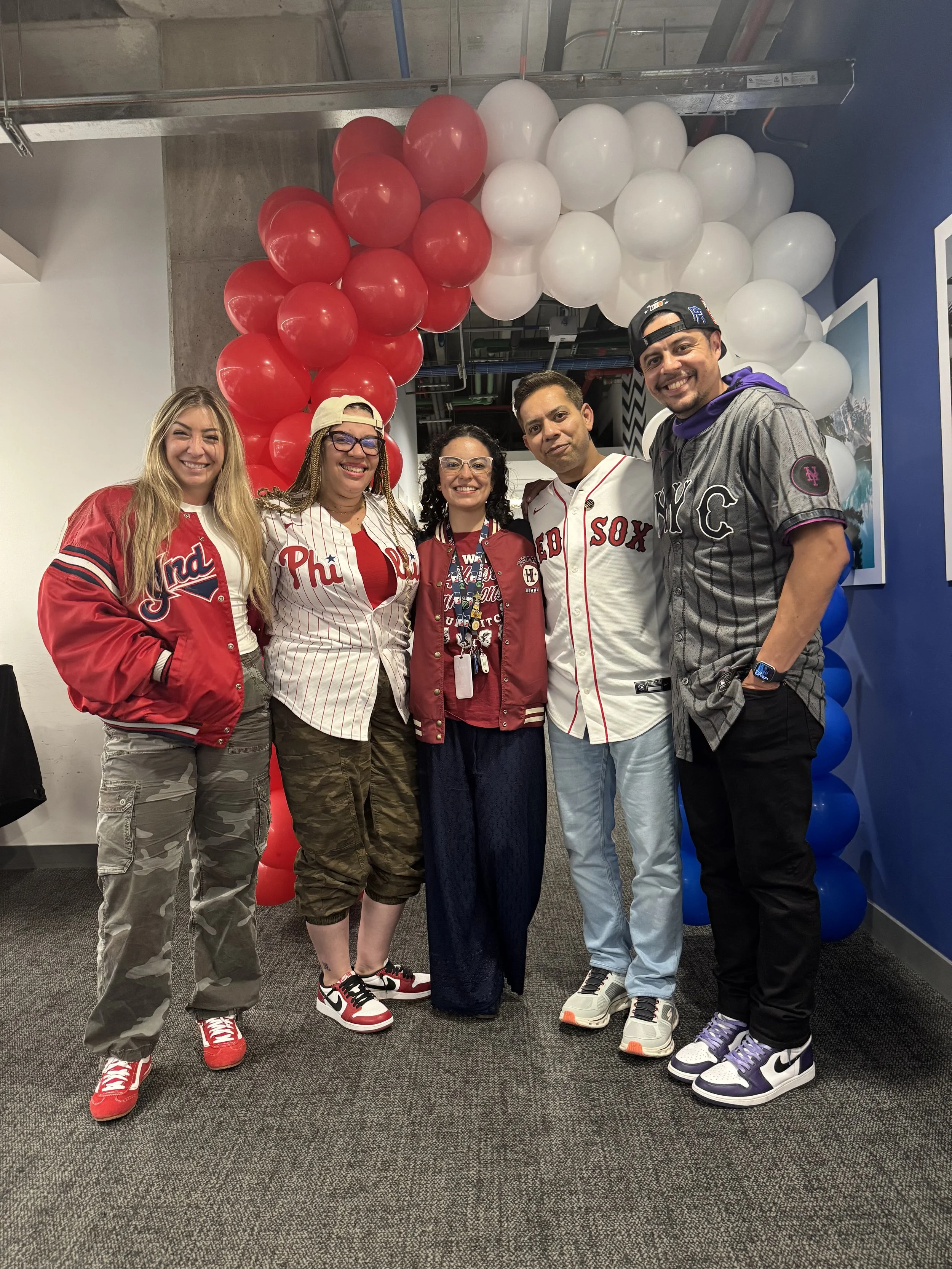
3 companies.
5 jerseys.
1 team.
Different businesses. Different titles, Different priorities. Different perspectives. One shared goal: creating the best operation we could for everyone it touched, our call center advocates, our clients, our leaders, and most importantly, our fans.
That’s a big part of what executive leadership looks like to me.
You don’t need everyone to have the same priorities. You need to create enough shared understanding that people with different priorities can move toward the same outcome.
And sometimes leadership means being willing to discover that the solution you were advocating for needs to change too.
Months later, I’m still smiling about this one.
Thought of the day: How do you create alignment when your partners don’t necessarily share the same priorities?